30 August 2026
Written by Jesse Whittaker, AHPRA-registered physiotherapist, APA member
7 Signs Mum or Dad Might Need a Physio
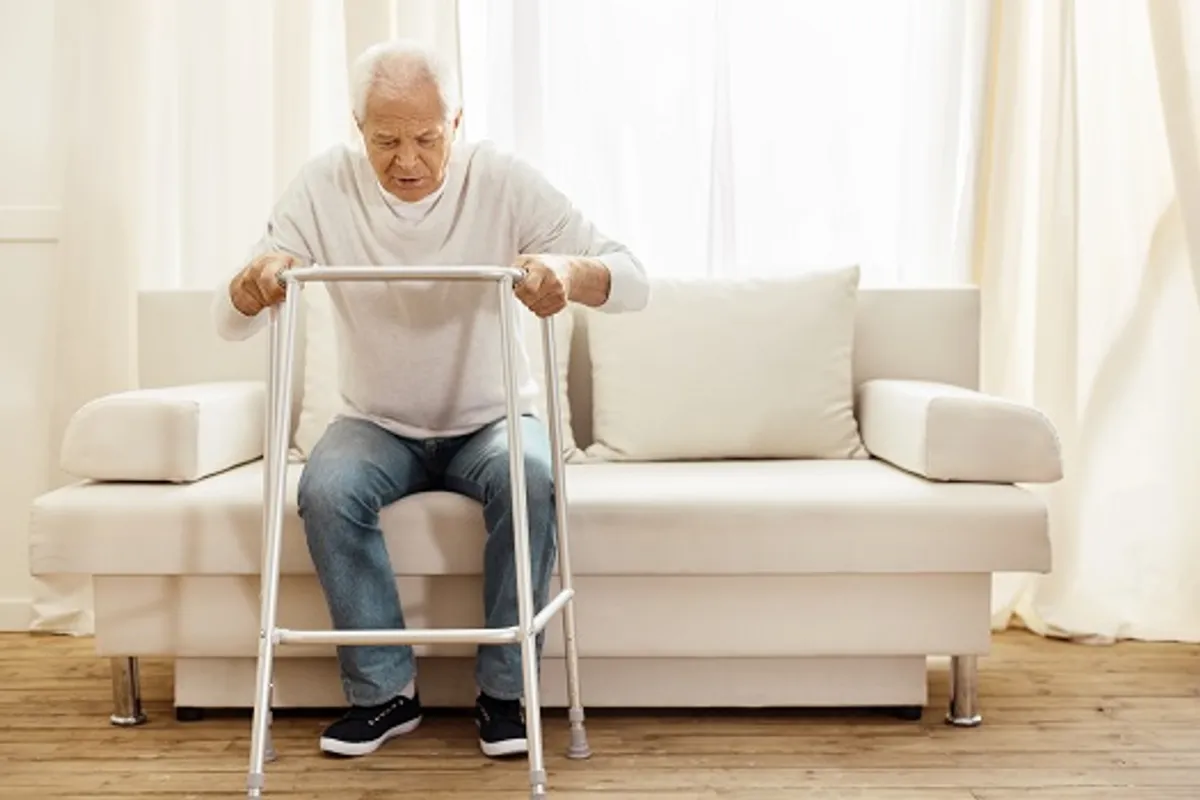
The people who call us tend to fall into three groups. Some are being proactive, wanting to work on balance and mobility before anything goes wrong. Some have just come home from hospital, often having decided to recover at home rather than finish an inpatient rehab stay. And some are calling after a recent fall.
The first group has the easiest job. Holding onto strength and confidence takes less work than rebuilding it afterwards, so there is a real advantage in being proactive rather than waiting for a fall to happen.
Most often it is one of the children who picks up the phone, particularly when nothing dramatic has happened yet, so that is who this is written for. If you are the older person reading it yourself, the same signs apply, and there is nothing wrong with making the call on your own behalf. Plenty of people do.
Families usually spot the change first, because the gap between visits is what makes it visible. That does not mean the person has not noticed. In our experience most people are well aware their balance has changed. They just do not want to say it out loud, because saying it means admitting they are getting older, and that is not a comfortable thought for anyone. It tends to be a subject people avoid from both directions, which is part of why things drift.
The signs worth paying attention to
1. Furniture surfing. Touching walls, bench tops and chair backs to get around the house. It is one of the earliest balance changes and one of the most reliable, because it happens at home where people feel safe enough to stop compensating.
The outdoor version is leaning on a shopping trolley. Plenty of people who would never use a walking stick will happily take a trolley from the front of the shop and lean on it for the next hour.
2. Struggling out of a chair. Rocking to build momentum, hauling on the armrests, or needing a couple of attempts. This is the one clients raise with us most often themselves.
Leg strength is part of it, but technique matters more than most people expect. Standing up requires leaning far enough forward to get your weight over your feet, and a lot of people have quietly stopped doing that. Often it traces back to a small stumble forward at some point that knocked their confidence, and the avoidance becomes automatic.
It is not unusual for someone who could barely stand, or could only manage it by pulling on the armrests, to be getting up without using their arms at all once the technique is addressed.
3. A fall, or a near miss. Including the ones written off as nothing.
Some falls genuinely are bad luck. Someone bumps into you at the shops, you clip your foot on the corner of the bed, you catch the edge of a rug. That happens to people of every age.
A younger person who catches their foot will usually get a leg out fast enough, and with enough strength behind it, to stay upright. Two things change with age. Reaction speed slows, so the leg comes out later than it needs to. And leg strength drops, so even when the leg gets there it may not hold, which is why recovering often takes several stumbling steps instead of one.
So a stumble that ends on the floor is rarely a story about the rug. It is a story about how much margin someone has when something unexpected happens. That margin can be trained, which is exactly why near misses are worth acting on rather than laughing off. Our home safety checklist covers the environmental side of the same problem.
4. A shrinking world. Something they used to enjoy has quietly dropped off, and the reason given for it is vague. They have not been to bowls in a while. The morning walk has stopped. They would rather someone else did the shopping.
Interest is rarely the real reason. More often it is confidence. Giving up an activity is easier than admitting it has started to feel unsafe, and it attracts far fewer questions from everyone else.
5. A change in how they walk. Shorter steps, a shuffle, feet not clearing the floor, a wider stance, or simply walking more slowly than they used to. Small changes in gait often show up before anything dramatic does.
Speed is the easiest one to spot without looking for it. If you have found yourself slowing down to stay alongside them when you never used to, that is worth paying attention to.
6. Difficulty turning around. Turning in a series of small shuffling steps rather than one smooth movement, or reaching out for something to steady themselves halfway through.
Families usually notice this in tight spaces first, because that is where there is least room to correct: the bathroom, the kitchen, or in front of a wardrobe. Turning asks more of your balance than walking in a straight line does, so it tends to show a change earlier.
7. After a hospital stay or an illness. We see this constantly. Strength drops away quickly when someone is unwell and off their feet, and it does not take two weeks. A few days can be enough to make a real difference.
This is sometimes called hospital acquired weakness, and you do not need to have been in intensive care to end up with it. People are often discharged medically well while being physically weaker than when they went in, and nobody has mentioned rebuilding. This is the same problem we work on in post-surgery rehabilitation.
Most of this can be improved
If you recognised several of those signs, that is not a reason to panic. It is a reason to do something about it.
Reaction speed can be improved. Strength can be rebuilt. Confidence usually follows once someone has proof they can trust their legs again. And technique, as with getting out of a chair, can sometimes be corrected surprisingly quickly. None of these are fixed traits that only ever head in one direction, and they respond to training at any age.
They are also measurable, which matters more than it sounds. Progress does not have to be a matter of opinion or how someone happens to feel on the day. We test where things are at the start, and we test them again later.
Have the conversation first
We are sometimes referred by a family member who has arranged everything without really discussing it with the person themselves. We turn up, and it becomes clear fairly quickly that the client did not particularly want us there.
That is a difficult place to start from, and not because of the awkwardness. Improvement in strength, balance and confidence comes from consistency, usually through a home exercise program done between visits. The hour with a physiotherapist is not what creates the change. What happens on the days in between is. Without the person being genuinely on board, that part does not happen, and the whole thing stalls.
So the conversation is worth having properly, even if it feels uncomfortable.
A few things that help:
- Lead with the activity, not the deficit. “You have not been to bowls in a while, do you miss it?” lands very differently from “I have noticed you are unsteady.”
- Make it about keeping something, not fixing something. Staying in the house, keeping the garden, still driving.
- Let it be their decision. An assessment is information, not a commitment to anything.
- Have it on its own. It goes better as its own conversation than as one item on a list of worries.
It is also worth involving their GP. Many people will accept a suggestion from their doctor that they would wave away from their own children or family, and a GP raising physiotherapy as a way to protect mobility and independence often carries more weight than the same words from family.
What to expect from a physiotherapy assessment
A first visit is a full assessment at home, covering:
- Pain, strength, balance and how someone is actually moving
- Current mobility status, recorded against outcome measures we can re-test later
- The home environment, including anything in it that makes moving around harder
- Whether equipment or a mobility aid would make things safer or easier
From there we build a home exercise program around the specific deficits we have found, along with education on doing it safely and on why consistency is the part that matters. The program is personalised to the person, their goals and their situation. Many of the people we see are managing several health conditions at once, and a one-size-fits-all program does not work for them.
You can read more about our aged care physiotherapy and our falls prevention and balance programs. Care managers and coordinators can make a referral online.
On cost, many older adults are funded through Support at Home, where physiotherapy is classed as clinical care and carries no out-of-pocket co-contribution. Our guide to Support at Home funding explains how that works.
If any of these 7 signs sound familiar, call us on 0490 427 392 and we will talk it through, or send us a message and we will call you back. There is no cost for the conversation, and if we are not the right fit we will tell you.

About the author
Jesse Whittaker
AHPRA-registered physiotherapist, APA member
Jesse is the founder of Shine Alliance and an AHPRA-registered physiotherapist who graduated from Griffith University in 2020. He works across the Gold Coast delivering physiotherapy in clients’ homes, with a special interest in neurological conditions, chronic and lower back pain, and balance and mobility.
More about JesseGeneral information only. This article is general education, not individual medical advice. For guidance specific to your situation, please speak with our team or your doctor.