19 October 2026
Written by Jesse Whittaker, AHPRA-registered physiotherapist, APA member
7 Questions to Ask Before Booking Hydrotherapy
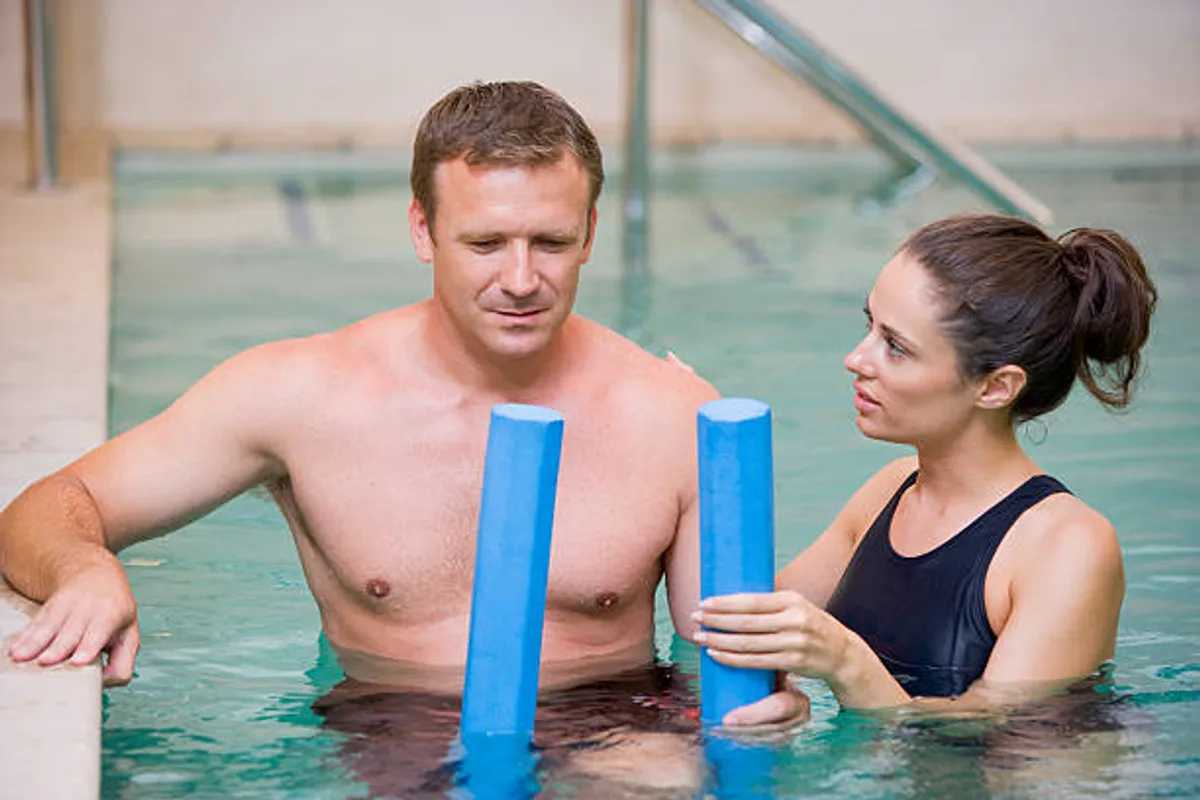
Hydrotherapy covers a wide range of things. At one end is a one-on-one physiotherapy session in warm water. At the other is a group aqua class led by a fitness instructor. Both have their place, but they are not the same thing, and from the outside they can look very similar.
If you are considering hydrotherapy for arthritis, chronic pain or recovery after surgery, these seven questions will show you what you are actually booking. We hear many of them on the phone, so the answers below are how we run our own sessions.
1. Who is running the session?
Ask whether the person leading it is a registered physiotherapist. Anyone practising as a physiotherapist in Australia has to be registered with AHPRA, and you can look them up on the public register in a minute.
The difference matters. A physiotherapist can assess what is going on with your body, choose exercises for your specific problem, and change them as you improve. An aqua class is a good way to stay active, but the instructor is leading a group, not treating an individual. Ours are one-on-one physiotherapy sessions, so the plan is built around you.
2. Will they be in the water with me?
Some providers coach from the edge of the pool. It is not the norm, but it does happen, and it is worth asking.
Being in the water changes what a physiotherapist can see. From beside you, we can see how a joint is actually moving and which side you are favouring without realising it, which is hard to spot from the poolside. It also matters if you are nervous. Knowing someone is right next to you, guiding you through each exercise, takes some of the worry out of the first session.
Our physiotherapist is in the water with you for every session.
3. Do I need to be able to swim?
No, and it is the worry we hear most. People tell us they cannot swim, that they do not like getting their face wet, or that they are afraid the water will be too deep.
Hydrotherapy is not swimming. The depth varies from pool to pool, but it is usually somewhere between waist and armpit height, so your feet stay on the floor. Your physiotherapist is beside you the whole time, and for many people that is what settles the nerves.
4. How warm is the pool, and is it safe for me?
Hydrotherapy pools are kept warmer than a normal lap pool. The ones we use run between 31 and 33 degrees. The warmth relaxes tight muscles and makes sore joints easier to move, which is a large part of why people with arthritis and chronic pain like it.
Warm water is not right for everybody, so a good provider asks about your health before you get in. For us, that starts with a few screening questions on the free phone call. If anything stands out, we will ask you to have a session on land first so we can gather the information we need, and in some cases we will ask for a GP note before you go in the water.
5. How will I get in and out of the pool?
Getting into a pool is a common worry, particularly if you use a walking frame or have limited mobility, so ask about it before you book.
We only work in pools that have everything needed: ramps, stairs, ladders and hoists. That means there is a safe way in whatever suits you. Tell us how you get around when we speak, and we will plan the way in with you before your first session.
6. What will we actually do?
A session runs for one hour, and it is not an hour of non-stop exercise. The first ten minutes or so is a chat about how you are going. Then we start with some gentle warm-up exercises, move on to the main set of exercises for your problem, with rest between sets so you can recover, and finish with around five minutes of walking as a cool-down.
Week to week, the aim is to progress what you are doing. Over time that can mean moving from deeper to shallower water, because the shallower the water, the less of your weight it carries.
You also leave with a program. Your exercises are sent to you through our exercise software, so you can print and laminate them and take them to the pool on the days between appointments. We can give you exercises to do on land at home as well, since prescribing exercise is exactly what a physiotherapist does.
7. What does it cost, and what is included?
Ask any provider whether pool entry is included and whether anything is charged on top of the session fee. With us it is simple. You pay the hydrotherapy session fee, and we pay the pool entry for both you and your physiotherapist. There are no other charges. Carers and companions of a person with a disability are admitted free at the pools we use, so bringing the person who supports you costs nothing extra either.
Hydrotherapy can be funded through the NDIS, Support at Home, DVA, Medicare care plans, WorkCover or private health insurance, or you can pay privately. If you are unsure which applies to you, our guides to Support at Home funding and NDIS physiotherapy funding cover the two most common in detail.
The easiest first step
The first step is a phone call. Call us on 0490 427 392 or send us a message and we will call you back. It is free, and there is no obligation to book anything.
On that call we ask the screening questions, so you will know straight away whether you can start in the pool or need a session on land first. We will also tell you which pool is closest to you and what your funding covers.

About the author
Jesse Whittaker
AHPRA-registered physiotherapist, APA member
Jesse is the founder of Shine Alliance and an AHPRA-registered physiotherapist who graduated from Griffith University in 2020. He works across the Gold Coast delivering physiotherapy in clients’ homes, with a special interest in neurological conditions, chronic and lower back pain, and balance and mobility.
More about JesseGeneral information only. This article is general education, not individual medical advice. For guidance specific to your situation, please speak with our team or your doctor.